

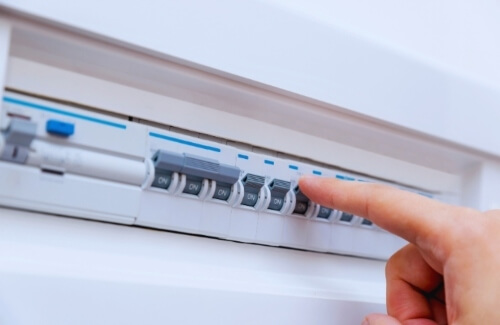
The foundation of a fire-safe home starts behind the scenes. Having a safe, up-to-date switchboard is the single most important step you can take to protect your family and your pets from electrical hazards. While we love our animals, they do not always understand the dangers of home infrastructure. Whether it is a teething puppy, a bored rabbit, or a cat that has taken a liking to your power board, pet-related damage to house wiring is a common electrical hazard.
If you are concerned about your home’s defenses, Dave Fenech Electrical is here to help. They are one of the only Level 2 electricians in Sydney who are true specialists in switchboard upgrades.
Why Pets Target Wiring
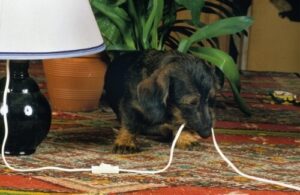
Various pet animals are known to chew cables. The most common are dogs and cats who engage in this behaviour. Rabbits and rodents like guinea pigs and pet rats also chew on various household items, including cables. Many bird species, mainly parrots and cockatiels, are attracted to the copper in cables and use their beaks to strip the cable insulation. Chewing is not necessarily the cause of all pet damage to cables. Some cats like to play with charging cables, tugging on them until they are damaged.
Chewing on a cable causes damage to the insulation around the copper components of the cable. Each cable has an outer protective covering or sheath made from polymer materials that ensure the delicate wiring within does not get damaged. As pets gnaw on the cable, they damage the outer layer of insulation and expose copper wiring to the outside environment.
Pet-related damage to house wiring is a common electrical hazard, and people looking to breed puppies will very likely have to deal with this.
Warning Signs to Watch For
Some signs are easy to spot while others require a closer look. Here is what to check throughout your home:
-
Visible Cable Damage: Look for chew marks, bite indentations, exposed copper or shredded insulation on any cable power, data, or appliance.. Even small nicks are serious.
-
Flickering Lights: Damaged wiring can lead to problems such as the flickering of lights within a particular room, or the tripping of breakers without apparent cause.
-
Burn Marks or Smells: A faint burning smell near a power outlet, appliance, or wall cavity is a serious red flag. Check for discolouration around outlet faceplates too.
-
Sparks at Outlets or Switches: A brief spark when plugging in a device can be normal, but repeated sparking or sparks at a switch suggests a loose or damaged connection that needs attention.
-
Pet Behavior: Animals are sensitive to electromagnetic fields and heat. If your pet suddenly avoids a specific wall or outlet, trust their instincts.
-
Warm Outlets: Outlets or switches that feel warm to the touch especially if they’re warm on a regular basis and without having been recently used can often be the result of a damaged wire.
Immediate Danger
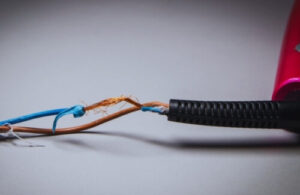
If you can see the copper cables within a wire, this is an emergency situation. Do not touch it. Switch off the relevant circuit at your switchboard and call a specialist immediately. It is not safe to try and fix this with tape.
What to Fix First: A Priority Order
Not every instance of pet-related wiring damage carries the same level of urgency but all of it eventually needs to be addressed. Here’s how to prioritise your repairs:
- Exposed Live Wiring — Fix Immediately
Cables where the coating has been compromised and copper exposed. This can be in-wall wiring, the cables of appliances still in use, or even extension cords. This poses a serious electrocution hazard as well as a fire risk. - Wiring Near Moisture — Fix Immediately
Damaged cables in wet areas like kitchens or bathrooms, or even outside, are a real worry. Electricity and water don’t mix. If the damaged cable is near a water source, it’s best to switch it off at the switchboard and leave it alone until someone checks it out. - Warm Outlets or Sparking — Fix Within 24 Hours
Houses catch fire for a few major reasons, one of which is arcing inside a cable. This means you will need an electrician to get into your wall and replace that section of cable. - Repeatedly Tripping Circuits — Inspect Promptly
If the breaker trips repeatedly, something could be wrong with the breaker itself, but more likely, if the breaker is tripping, it’s doing its job, and it could be chewed wiring. - Superficially Damaged Appliance Cables (Still Insulated) — Replace Soon
Charging cables. If they’re damaged enough to be chewed on, they’re definitely not safe to use so replace them. Any other appliance cords. Same logic as charging cables if they’re damaged enough to be chewed on, they’re definitely not safe to use so replace them. - Data & Low-Voltage Cables — Repair When Convenient
There is no safety risk. However, there might be a performance impact. Consider replacing the cables and putting them in a cable management system to protect them.
Good to Know
If anyone wants to carry out repairs on fixed electrical wiring, that work must be carried out by a licensed electrician. I can imagine the risk of fire and electric shock would be quite significant if you allowed someone who’s not a licensed electrician to carry out repairs on fixed electrical wiring.
Protecting Your Wiring Going Forward
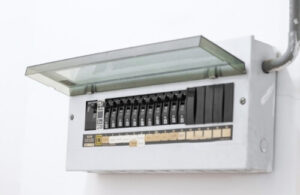
Once the damage is repaired, the next step is making sure that it doesn’t happen again. Here are some practical steps that will help in an Australian home:
Use Flexible Cable Conduit
Any cable running along skirting boards, through living areas, or behind entertainment units should be run through split cable conduit or flexible corrugated tubing. This is inexpensive, easy to install, and will deter all but the most persistent chewers. Your electrician can do this as part of a repair visit.
Elevate and Conceal
Cables left on the floor or draped loosely are an open invitation. Use cable clips to run power cords along the back of furniture, fix them to the wall just above skirting height, or have an electrician relocate outlets to reduce the amount of exposed cable in your home.
Install a Safety Switch (RCD) If You Haven’t Already
A Residual Current Device (RCD) will cut power immediately if current leaks through a damaged wire. If your switchboard is not currently fitted with RCDs, chat with your electrician about having them fitted.
Consider Bitter Spray or Cable Covers for High-Risk Areas
Sprays with a bitter taste can be applied to the cables to prevent your pet from biting on them. Plastic boxes used to cover power boards can also be effective in prevention.
When to Call an Electrician Straight Away
To summarise the non-negotiables, call a licensed electrician immediately if you notice:
-
Any exposed copper wiring anywhere in your home.
-
A burning smell coming from an outlet or wall.
-
Visible scorch marks near power points.
-
A circuit breaker that keeps tripping.
-
Any suspicion that wiring inside a wall has been damaged.
Pet-damaged wiring is not a problem to monitor and see if it gets worse. A small repair today is a fraction of the cost of what happens if a fault is left to develop.
Protecting your home from pet-related electrical hazards starts with a modern switchboard. While deterrents like cable covers help, a professionally installed RCD is your best defense against fire and shock. Don’t wait for a small chew mark to become a major emergency. If you suspect your wiring is compromised, contact Dave Fenech Electrical to ensure your home remains a safe haven for your entire family.